Think tutor, not answer machine
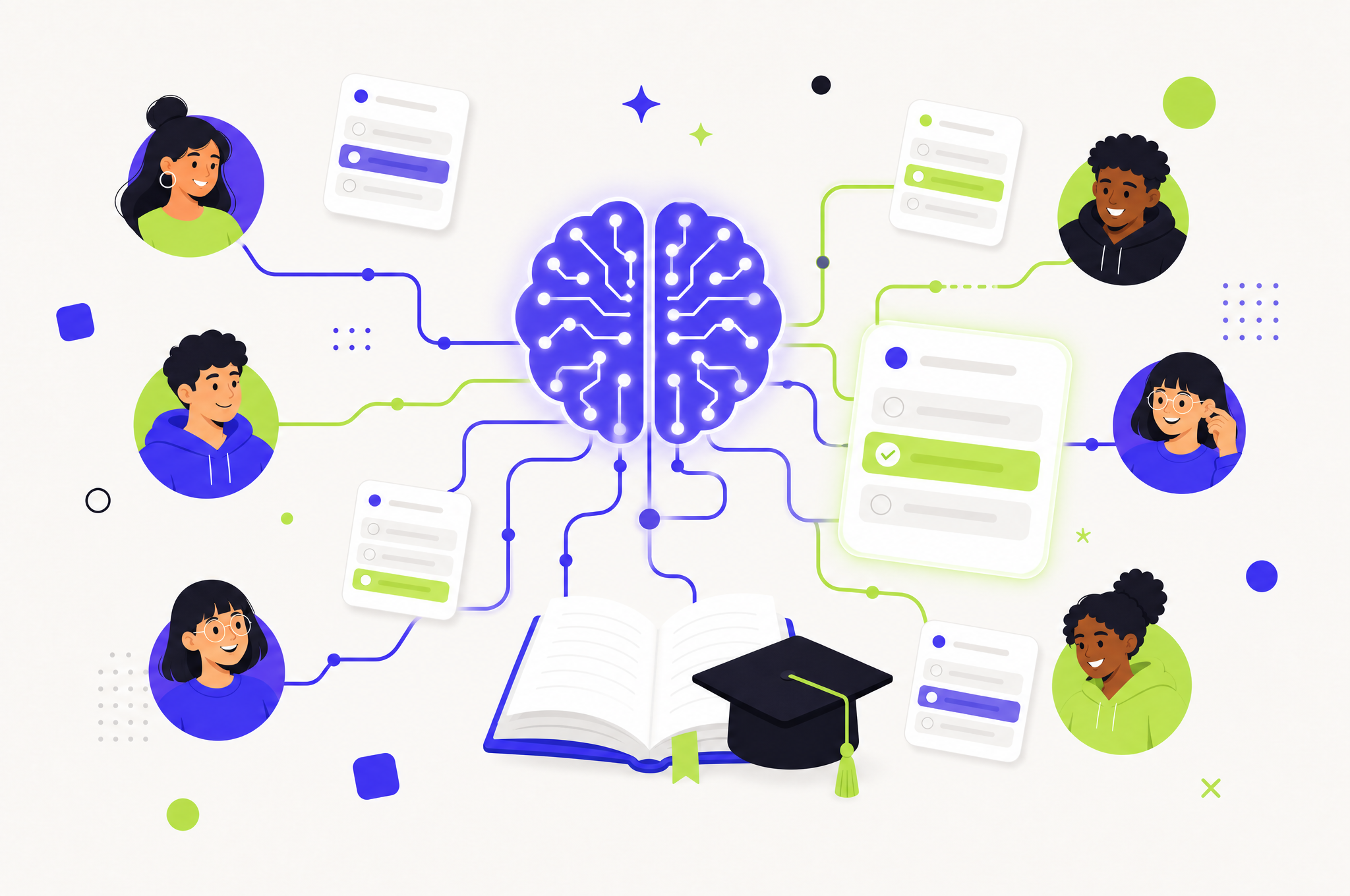
The mental model that changes everything: ChatGPT is not a search engine or a homework machine - it's a conversation partner that adapts to you. One-shot questions get generic answers; conversations get tutoring. State your level ('I'm a class 12 student', 'I'm new to programming'), say what you already understand, and ask follow-ups until the explanation actually lands.
The second habit that separates learners from copiers: bring your own attempt. 'Here's my solution - where did I go wrong?' teaches you something. 'Solve this for me' teaches the model nothing it didn't know and you nothing at all.
Prompt patterns that actually teach you
You don't need 'prompt engineering' - you need a handful of patterns that turn the chatbot into a tutor:
- ✓Explain at my level: "Explain [topic] like I'm a beginner, then again at exam level, then give me one analogy."
- ✓Socratic mode: "Don't give me the answer - ask me guiding questions until I work it out myself."
- ✓Quiz me: "Ask me 10 mixed questions on [chapter], one at a time. Wait for my answer, then tell me if I'm right and why."
- ✓Critique my attempt: "Here's my answer/essay/code. Point out errors and weak reasoning before showing a better version."
- ✓Find my gaps: "I'll explain [topic] in my own words - tell me what I got wrong or missed."
- ✓Worked example: "Show a step-by-step solution to a SIMILAR problem, not this exact one, so I can try mine again."
Practice this now
Where the cheating line actually is
The line is simpler than most debates make it: assessment exists to measure what's in your head, so anything that fakes what's in your head is cheating. Submitting AI-written essays, assignments or code as your own crosses the line - and increasingly, institutions detect it or test you orally on 'your' work, where the gap shows instantly.
Everything before and around the attempt is fair game almost everywhere: understanding the topic, generating practice, getting feedback on drafts you wrote, checking your solution after you solved it. When in doubt, ask your teacher what's allowed - policies differ, and 'I didn't know' rarely helps.
Related reading
Know the failure modes
Chatbots have two failure modes every student must internalise. First, hallucination: the model can invent facts, citations, formulas and case names, delivered in the same confident tone as correct answers. Verify anything that matters against your textbook or official sources - especially numbers, dates and quotes.
Second, maths and logic slips: models have improved, but they can still make arithmetic errors or subtly wrong derivations while sounding authoritative. For quantitative subjects, check each step yourself - which is, conveniently, exactly the kind of active processing that makes you learn.
Practice this now
A daily 20-minute ChatGPT study loop
- ✓Minutes 0-5: pick one topic from today's syllabus and ask for a level-appropriate explanation with one analogy.
- ✓Minutes 5-8: explain it back in your own words; ask the AI to correct and fill gaps.
- ✓Minutes 8-18: get quizzed - one question at a time, answering before you see solutions.
- ✓Minutes 18-20: note your misses somewhere you'll see tomorrow, and repeat them first next session.