What AI is genuinely good at (and terrible at)
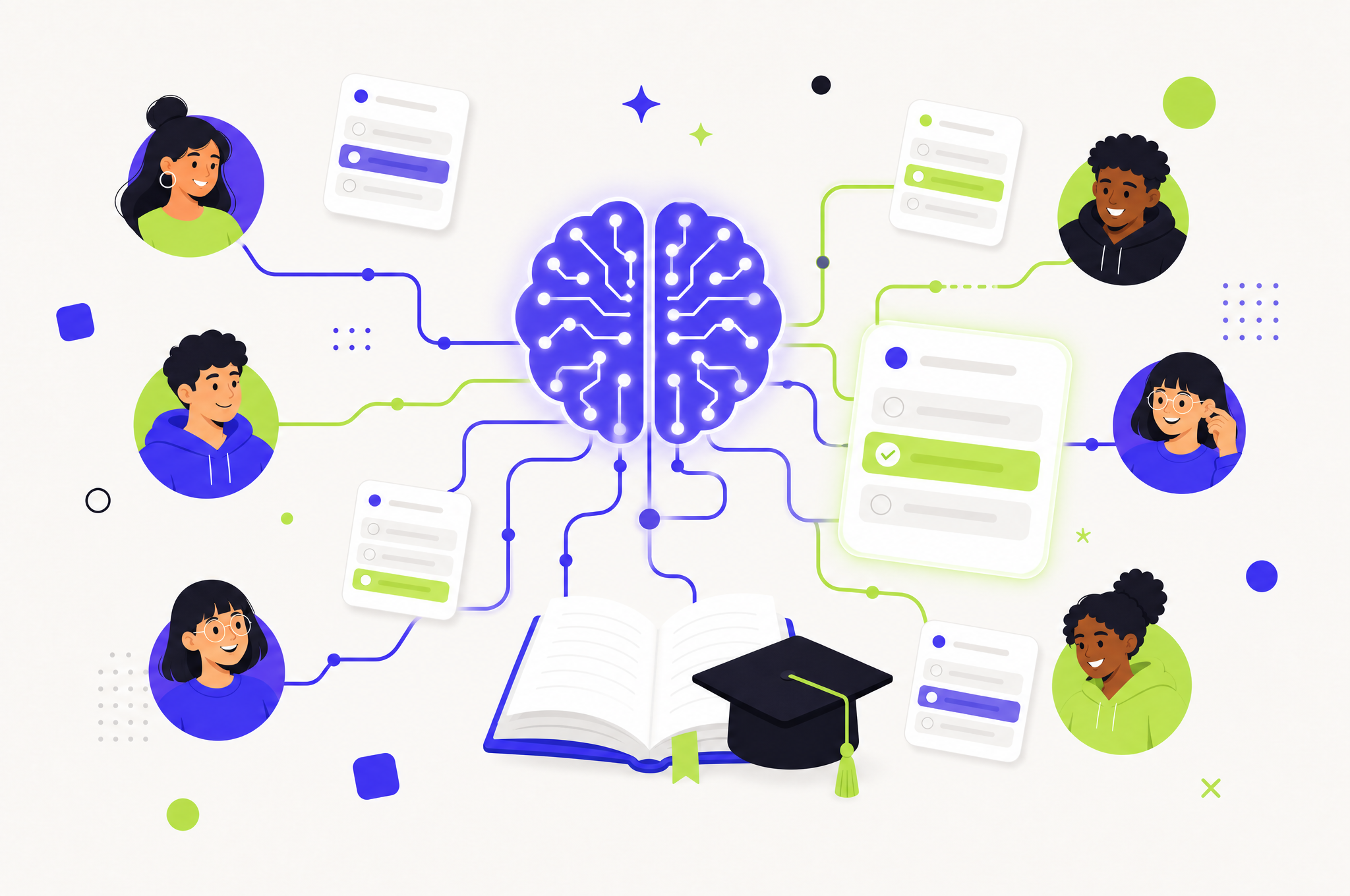
AI's superpower for students is transformation: it can turn your notes into questions, a dense textbook paragraph into a plain-English explanation, or a topic name into a structured revision plan - instantly, and as many times as you want. That removes the biggest friction in good studying, which is creating the materials for active practice.
What AI is terrible at is being your memory. If the AI writes the essay, solves the problem, or summarises the chapter and you just read the output, no durable learning happened - reading fluent text feels like understanding, but the memory belongs to the machine. Every technique below follows one rule: the AI sets up the practice, and your brain does the work.
| Study task | Good use of AI | The trap |
|---|---|---|
| Understanding a concept | Ask for an explanation at your level, then re-explain it back from memory | Reading the explanation once and moving on |
| Practice | Generate quiz questions and answer them before seeing solutions | Reading Q&A pairs passively like notes |
| Homework / assignments | Ask for hints, checks on YOUR attempt, or similar worked examples | Submitting AI output as your own work |
| Summarising | Summarise from memory first, then let AI check what you missed | Letting AI summarise so you never process the material |
| Planning | Draft a revision schedule you then adjust to reality | Endlessly re-planning instead of studying |
Turn any material into practice questions
Decades of research say retrieval practice - pulling answers out of your own head - beats re-reading by a wide margin. The classic problem was that making good practice questions takes ages. AI removes that excuse entirely: paste your notes or name a chapter and ask for mixed multiple-choice and short-answer questions, then answer them cold before looking at any solutions.
Make the questions harder as you improve: ask for 'application-level questions that combine two concepts' or 'questions about the exceptions and edge cases'. The point is to keep practice slightly uncomfortable - that's the difficulty that builds memory.
Practice this now
Get explanations at exactly your level
The most underrated AI study move is the follow-up question. A textbook explains a concept once, in one register, and moves on; an AI will re-explain it five different ways without judgement - 'explain it simpler', 'use a cricket analogy', 'show me a worked example', 'what's the most common misunderstanding here?'. Keep asking until it clicks.
Then close the loop with the Feynman technique: explain the concept back in your own words - out loud or in writing - and ask the AI to point out what you got wrong or fudged. That step converts a borrowed explanation into your own understanding.
Practice this now
Plan your revision, don't outsource it
AI is a competent planning assistant: give it your exam date, subjects, weak topics and available hours, and it will draft a sensible spaced schedule in seconds. Treat the draft as a starting point - cut it down to what's realistic, because an over-ambitious plan you abandon in three days is worse than a modest one you follow.
Watch for 'productive procrastination': tweaking prompts, regenerating plans and organising notes are all ways of feeling busy without studying. A good ratio is minutes planning, hours practising.
Verify, always
AI models hallucinate: they can invent dates, misquote formulas, and confidently state wrong facts - especially on niche or very recent topics. For anything that matters (exam facts, formulas, laws, dosages, dates), verify against your textbook, official syllabus or another authoritative source before it goes into your notes.
A practical habit: let AI explain and generate practice, but keep your source of truth official - NCERT, your lecture notes, the exam board's own material. AI is the tutor, not the textbook.
Mistakes that turn AI into a learning killer
- ✓Letting AI write assignments you submit - you lose the learning and risk academic-integrity penalties.
- ✓Reading AI explanations without ever testing yourself - fluency is not memory.
- ✓Trusting AI facts without verification - hallucinations look exactly like real answers.
- ✓Using AI for everything - mental effort is the point of studying, not an inefficiency to optimise away.
- ✓Skipping the syllabus - AI doesn't know your exact exam pattern unless you tell it.