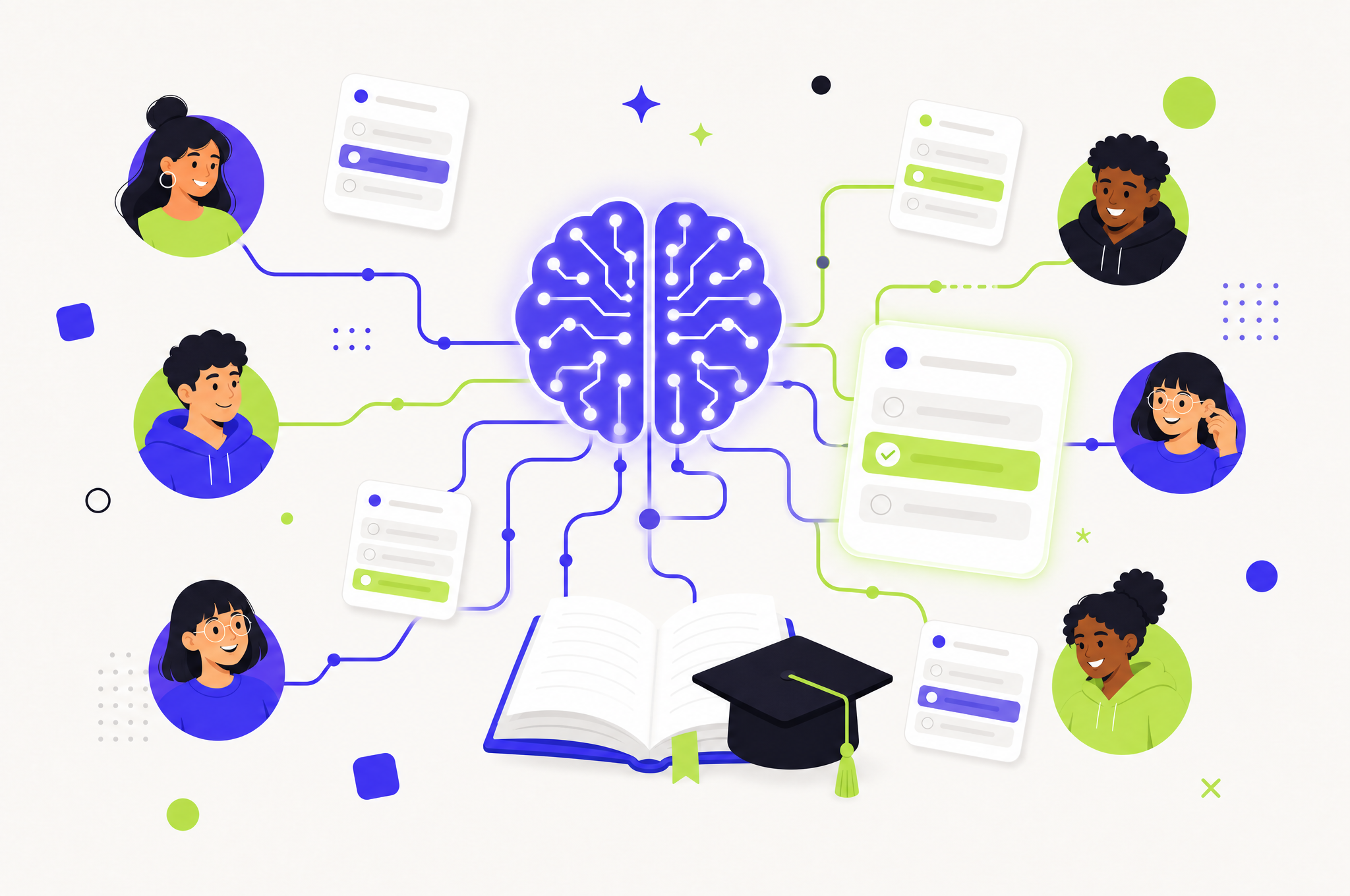
From data to insight: what learning analytics is
Learning analytics is the measurement and analysis of data about learners and their contexts, in order to understand and improve learning. In practice it means pulling together signals - logins, time on task, assignment submissions, quiz performance, forum participation - and turning them into patterns a teacher or advisor can act on.
The shift it enables is from reactive to proactive. Instead of discovering a student is struggling when they fail a midterm, staff can see the warning signs weeks earlier and reach out while there's still time to help.
How predictive early-alert systems work
Predictive models learn from historical data which patterns tend to precede a student dropping out or failing, then watch current students for those patterns. A drop in engagement, missed submissions, or declining quiz scores can raise a flag.
- ✓Behavioural signals matter most: falling engagement over time predicts risk better than a single low grade.
- ✓The output is a prompt to act - an advisor reaching out, a tutor assigned, resources offered - not a verdict.
- ✓Good systems explain why a student was flagged, so staff can judge whether the signal is real.
- ✓The measure of success is improved outcomes after intervention, not the accuracy of the risk score alone.
The ethical guardrails
Prediction in education carries real risks, and ignoring them causes harm. A model trained on biased historical data can reproduce that bias, flagging students from certain backgrounds unfairly. A risk label, if it reaches the wrong hands or shapes how a teacher treats a student, can become a self-fulfilling prophecy.
Responsible use rests on a few principles: be transparent with students about what's collected and why; minimise and protect the data; audit models for bias; and never let a prediction make a consequential decision on its own. The algorithm surfaces a concern; a human decides what to do.
Keeping humans in the loop
The purpose of predictive support is to direct scarce human attention, not to replace it. The analytics can tell an advisor 'this student's engagement has dropped sharply' - but only a person can have the conversation that uncovers why, whether it's academic, financial or personal, and what actually helps.
The institutions that get the most from analytics treat it as an early-warning radar for a caring human response. The data finds the student; the teacher supports them.