What 'personalised' actually means
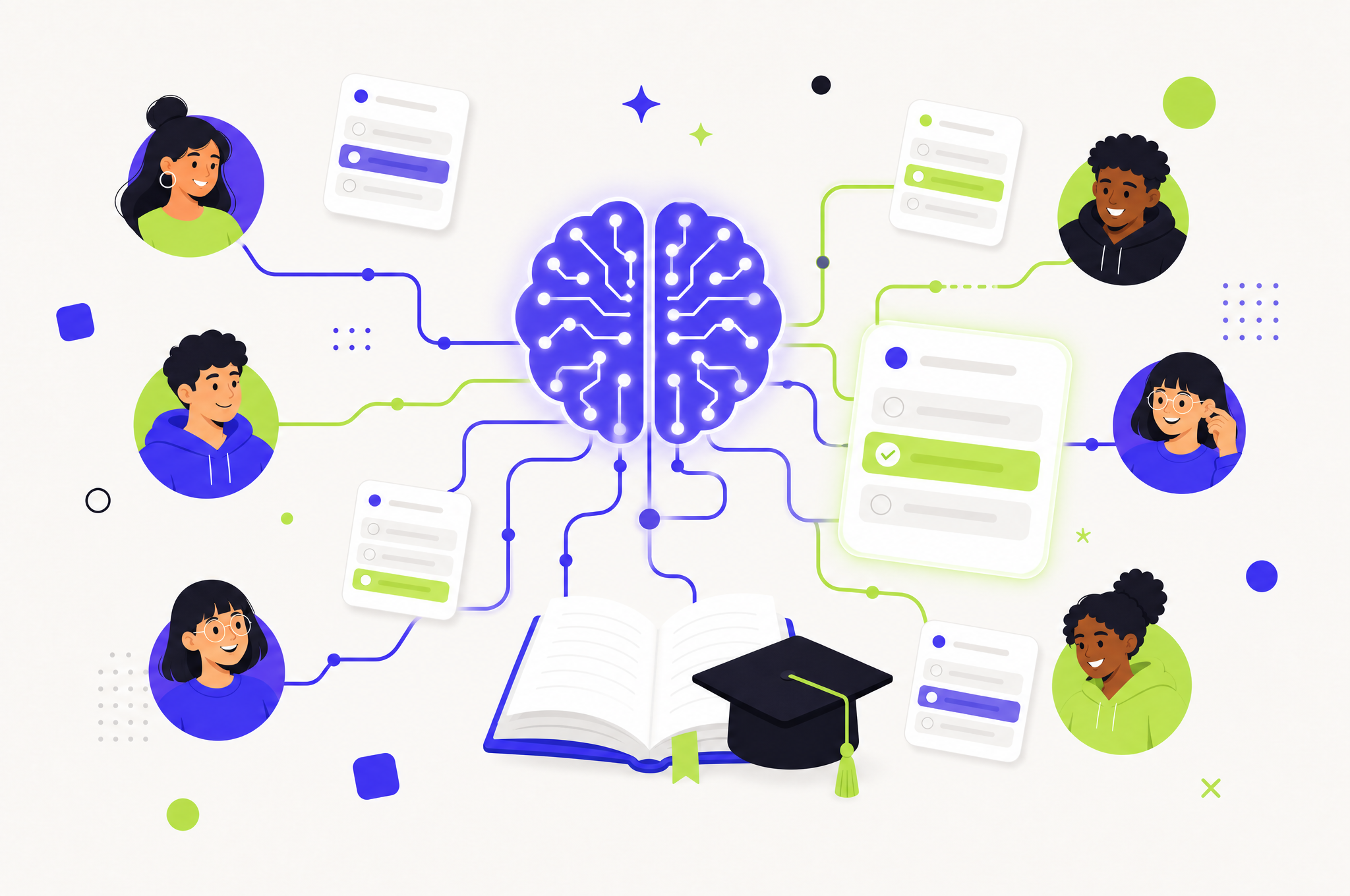
Personalised learning isn't just letting students click through the same content at their own speed. A genuine adaptive system changes what each learner sees based on evidence of what they know. Answer a set of questions well and it advances or raises difficulty; struggle and it slows down, revisits prerequisites, or offers a different explanation.
The goal is to keep every learner in their zone of proximal development - the sweet spot where material is challenging enough to promote growth but not so hard it causes shutdown. A whole-class lesson can only hit that zone for a few students at once; an adaptive system aims to hit it for each.
How the adaptation engine works
Under the hood, most systems combine a few well-understood mechanisms:
- ✓Diagnostic data: the system infers a learner's current knowledge from their answers, response times and error patterns.
- ✓Adaptive difficulty: questions get harder after correct answers and easier after mistakes, keeping challenge calibrated.
- ✓Mastery-based progression: learners advance only once they've demonstrated understanding of a concept, not after a fixed number of items.
- ✓Feedback and explanations: every answer - right or wrong - triggers immediate, specific feedback, which is where most of the learning happens.
The genuine benefits
Done well, personalisation delivers things a traditional classroom struggles to. Practice becomes efficient because no one wastes time on what they've mastered or drowns in what they haven't. Feedback is instant rather than arriving days later with a marked worksheet. And teachers get dashboards that surface exactly who is stuck on what, so their limited time goes where it's needed most.
For learners who are behind, adaptivity quietly fills gaps without the stigma of being singled out. For those ahead, it removes the boredom of waiting for the class to catch up.
The limits teachers should keep in view
Personalised learning is a tool, not a teacher. Its adaptations are only as good as the data and the question bank behind them - shallow content produces shallow personalisation. There's also a real risk of narrowing: optimising for measurable right-answer progress can crowd out open-ended, creative and collaborative learning that doesn't fit a multiple-choice loop.
And no algorithm supplies motivation, mentorship, or the judgement to notice a student is disengaged for reasons that have nothing to do with the material. The strongest model is blended: let the system handle adaptive practice and diagnostics, and free the teacher for the human work only they can do.