EdTech8 min read

Gamification in Education: What Works and What Backfires

Add points, badges and a leaderboard to a lesson and engagement shoots up - or so the pitch goes. Gamification is one of the most popular ideas in education technology, and one of the most misapplied. Done thoughtfully it taps real drivers of motivation; done lazily it produces a brief sugar rush that fades, or actively demotivates. This guide unpacks the psychology, separates what works from what backfires, and shows how to design gamification that lasts.

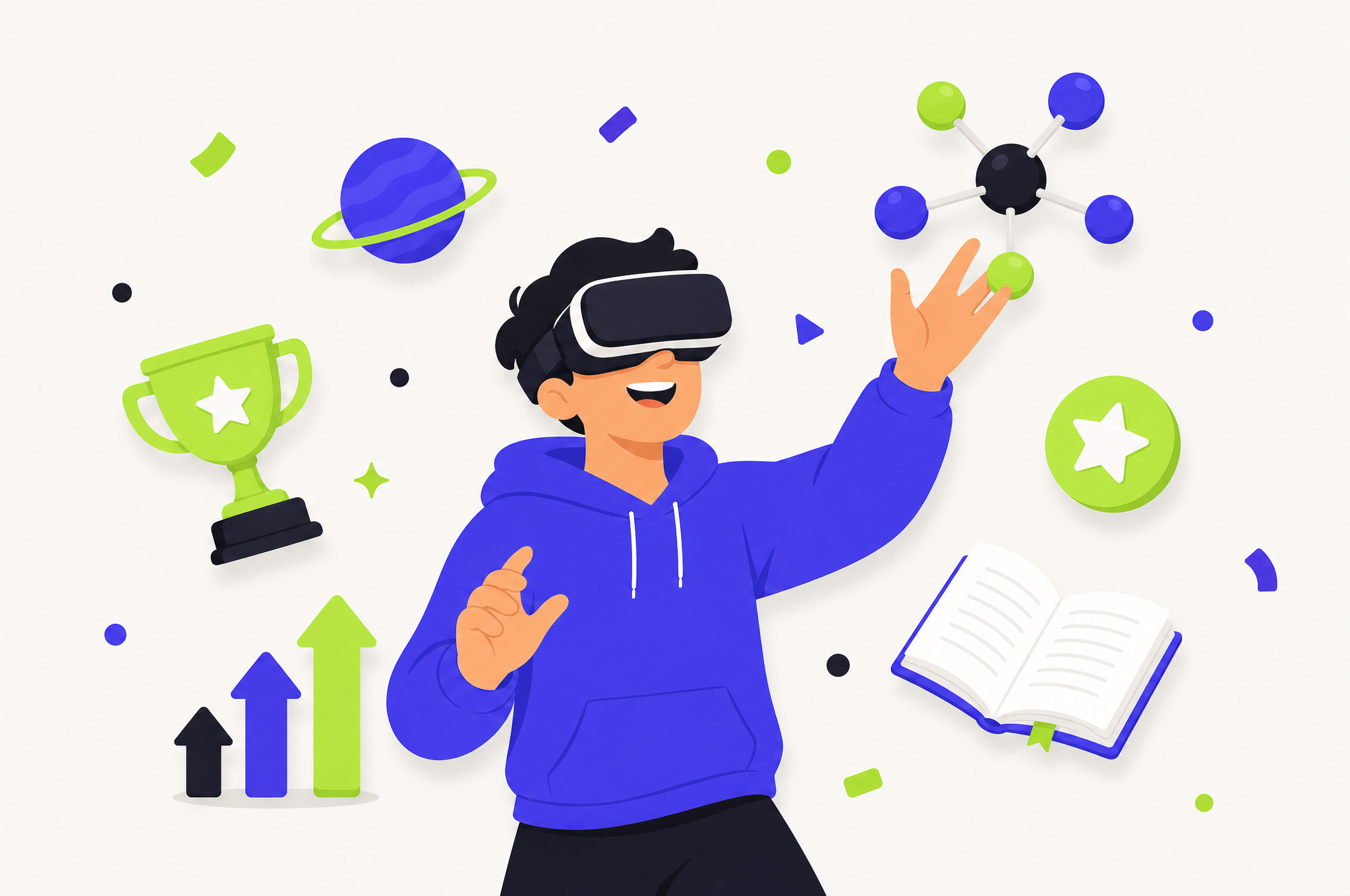
A student wearing a VR headset reaching toward a floating molecule and planet, surrounded by a trophy, a star badge, an open book and level-up arrows, representing immersive gamified learning

Gamification vs game-based learning

It's worth separating two things people conflate. Gamification adds game-like elements - points, badges, levels, streaks, leaderboards - to an otherwise ordinary activity. Game-based learning uses actual games as the vehicle for learning. This guide is about the former, which is far more common in classrooms and apps.

The mechanics are simple; the psychology is not. Whether those points and badges help or hurt depends entirely on how they connect to what actually motivates people to learn.

The psychology: why it can work

The best gamification works because it aligns with Self-Determination Theory, which identifies three drivers of intrinsic motivation. Good design feeds all three:

  • Competence: clear progress, immediate feedback and achievable challenges let learners feel themselves getting better.
  • Autonomy: choices - which challenge to attempt, which path to take - give learners ownership rather than compliance.
  • Relatedness: collaboration, friendly competition and shared goals connect learners to others.
  • On top of these, well-tuned challenge creates flow - the absorbing state of being fully engaged at the edge of your ability.

Why it backfires

The failure mode is treating gamification as bribery. When points and badges become the reason to do something, they can crowd out any genuine interest - a phenomenon called the overjustification effect. Once the reward disappears, so does the behaviour, and sometimes intrinsic motivation ends up lower than before.

Leaderboards are especially double-edged. They motivate the students already near the top and demoralise everyone else, who quickly learn they can't win and disengage. Purely extrinsic, competitive gamification often produces short-term compliance and long-term apathy.

Designing gamification that lasts

The durable approach uses game elements to support learning, not to substitute for it. Emphasise progress and mastery over ranking - progress bars, personal bests and levels that show growth. Use points and badges as meaningful feedback tied to real achievement, not as currency for trivial actions.

Favour designs where learners compete mainly against their own past performance, offer genuine choice, and build in collaboration. And remember the point is the learning: if a game element isn't helping someone understand or practise better, it's decoration at best and a distraction at worst.

The bottom line

Now go test yourself

Gamification is neither magic nor a gimmick - it's a lever that works only when it's connected to real motivation. Feed competence, autonomy and relatedness, emphasise personal progress over leaderboards, and keep every game element in service of actual learning. Treat points as bribery and you get a fading sugar rush; design for intrinsic motivation and you get engagement that outlasts the reward.

A well-designed quiz is gamification at its best: instant feedback, visible progress, and challenge tuned to your level. Generate one on any topic and feel how the right mechanics make practice genuinely engaging - not just for the points.

FAQs

Frequently asked questions

What is gamification in education?

Gamification applies game elements - points, badges, levels, streaks, challenges and leaderboards - to learning activities to boost engagement and motivation. It differs from game-based learning, which uses actual games as the learning vehicle.

Does gamification actually improve learning?

It can, when it supports intrinsic motivation - feeding learners' sense of competence, autonomy and relatedness with meaningful feedback and progress. When used as shallow reward, it tends to produce short-term compliance that fades once the points stop.

Why does gamification sometimes backfire?

Because extrinsic rewards can crowd out genuine interest (the overjustification effect), so behaviour vanishes when the reward does. Leaderboards in particular can demoralise the majority who can't reach the top, causing disengagement.

Are leaderboards good for learning?

They're double-edged. Leaderboards motivate students near the top but often demoralise everyone else. Designs that emphasise personal progress and competing against your own past performance tend to sustain motivation far better.

How do you design effective gamification?

Support competence, autonomy and relatedness; emphasise progress and mastery over ranking; tie points and badges to real achievement as meaningful feedback; include choice and collaboration; and ensure every game element genuinely helps learning rather than decorating it.

Related quizzes

Put it into practice

Keep reading

Related articles

Browse all articles →

Test yourself in two minutes

Six adaptive questions, every answer explained by an AI tutor. Free.

▶ Start an AI quiz