What HyFlex actually is
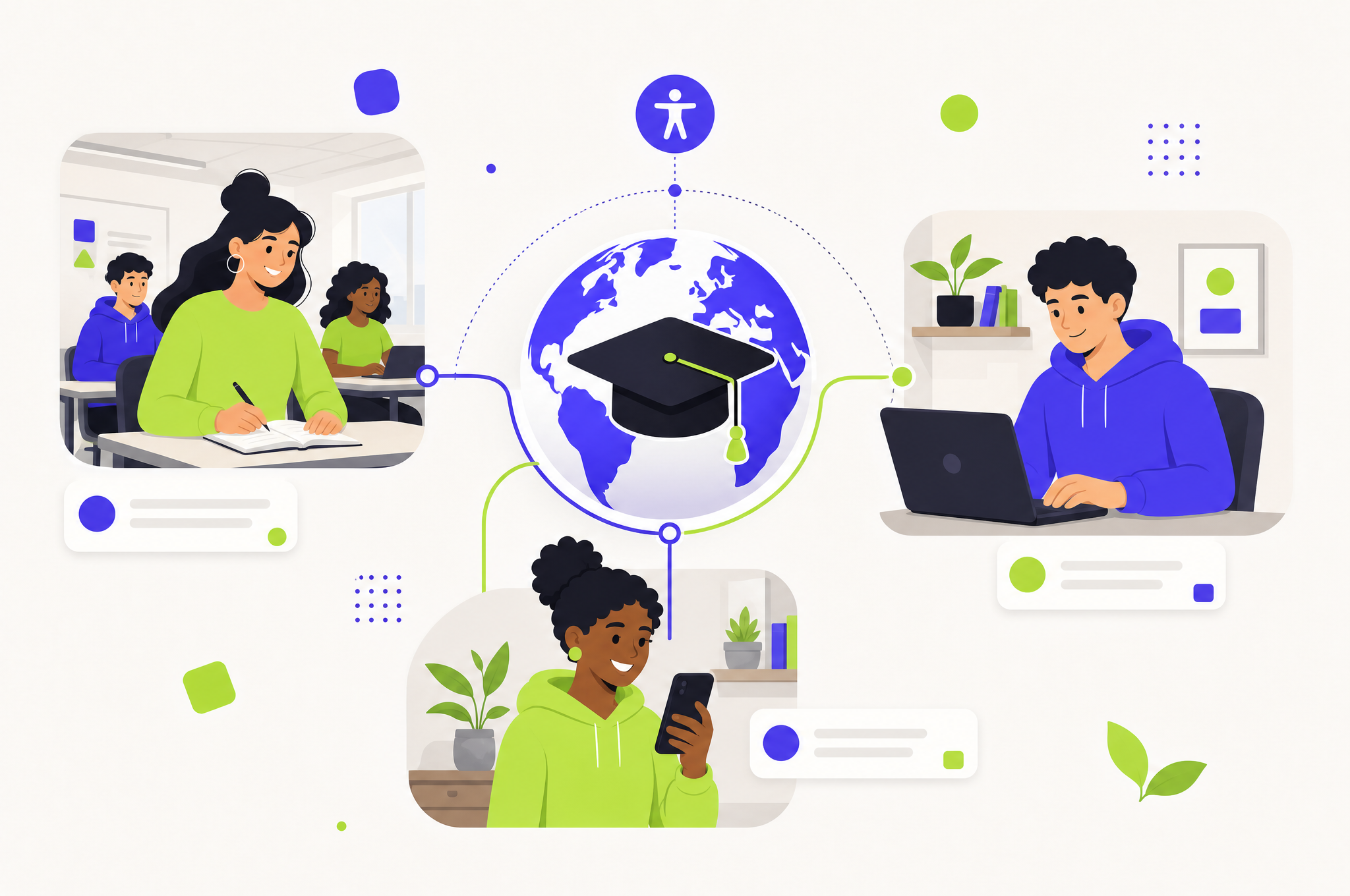
HyFlex - short for Hybrid-Flexible - is a course design where each class session and activity is offered in multiple modes at once, and students choose which to use, often session by session rather than committing for the term. In its full form there are three participation paths: attending in person, joining live online (synchronous), or working through the material on your own time (asynchronous).
The distinguishing feature isn't just that online options exist - it's that the choice belongs to the student, and all paths are meant to be genuinely equivalent, not a full experience plus a second-class alternative.
The principles that define it
HyFlex done properly rests on a few foundational principles, usually stated as four:
- ✓Learner choice: students select the mode that fits their needs and circumstances for each session.
- ✓Equivalency: every mode leads to equivalent learning outcomes - not identical activities, but equal value.
- ✓Reusability: artefacts from one mode (recordings, discussion threads, materials) serve learners in the others.
- ✓Accessibility: all students have the resources and skills to succeed in whichever mode they choose.
Benefits and honest challenges
The upside is substantial. HyFlex maximises access - it accommodates students juggling jobs, caregiving, illness, disability or distance - and builds resilience, since a course can continue seamlessly through disruptions that would shut down a purely in-person class. It respects that adult and diverse learners have very different constraints.
The challenges are just as real. It roughly multiplies a teacher's work: you're effectively designing and running three versions of a course simultaneously. Technology has to be reliable, classroom-online interaction is genuinely hard to orchestrate, and there's a constant risk that online or asynchronous students feel like an afterthought while attention gravitates to the people in the room.
Best practices that make it work
The difference between a HyFlex course that thrives and one that frustrates everyone comes down to deliberate design:
- ✓Design for the online and asynchronous learner first - if it works for them, the in-person experience follows easily; the reverse rarely holds.
- ✓Build interaction into every mode: use shared digital activities (polls, quizzes, collaborative docs) that in-person and remote students do together, so no one is a spectator.
- ✓Keep a single source of truth: one clear hub where all materials, recordings and instructions live for every path.
- ✓Assess by outcome, not attendance mode - what students can do, not how they showed up.
- ✓Get the tech and support right: reliable audio/video, and equip students to succeed in whichever mode they pick.